
- Any level of knowledge
- Just the child and the teacher
- €35 / lesson (60 min)
- Online: Zoom + interactive classroom
- Schedule — to suit you
Fill out the form and we'll contact you as soon as possible to schedule the first lesson:

- Small group (6–10 students depending on age)
- Group composition by same level and age
- Twice a week, 60 min
- €12.81 / lesson (~€89/mo)
- Online: Zoom + interactive class
- Choice of evening time slots
Fill out the form and we'll contact you as soon as possible to schedule the first lesson:

- Effectiveness comparable to individual lessons
- €45 / lesson, 60 min · (€22.5 per student, −35% savings)
- Come with a friend or sibling
- Online: Zoom + interactive class
- Schedule — to suit you
Fill out the registration form and we'll get in touch so the children can start together:
Latvian
for kids
So Latvian feels useful, not intimidating — at school, in everyday life, and in exams. We teach through interest and context, not through cramming.
Choose your format
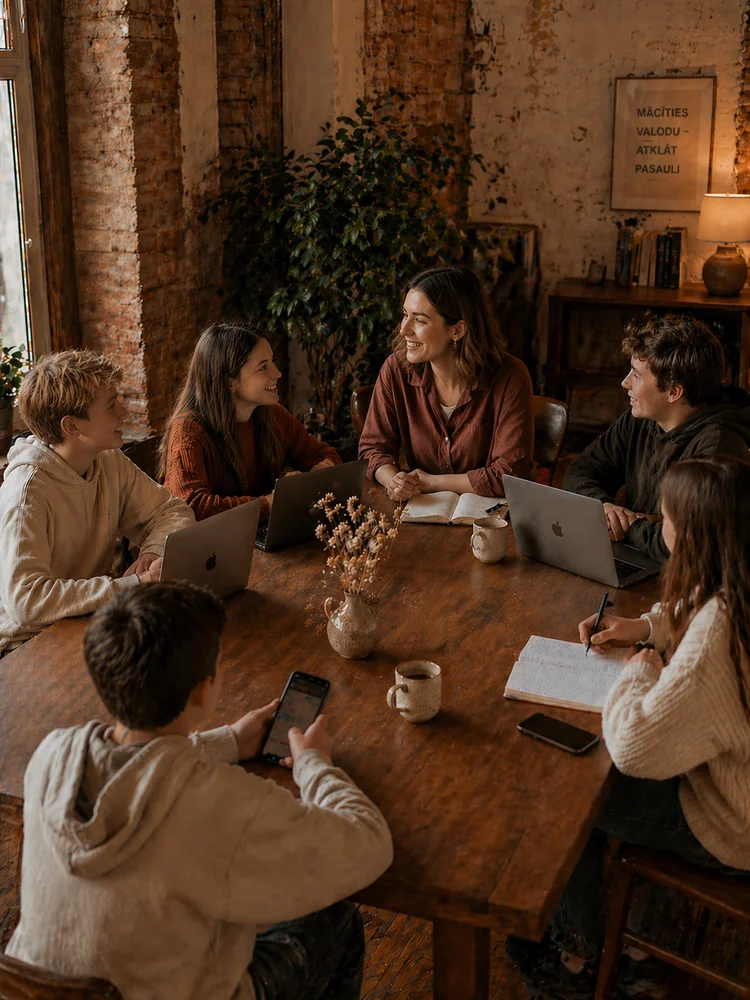
Every format brings results. The difference is in the pace, the budget and the depth of immersion. Choose whatever suits your child and your schedule.
Learning together
A course built on Diāna Karpova’s own methodology — for any age and level. There is a compulsory test on arrival, after which we place each child in a group by level and pace.
A group at your child’s level
After the test we place the child in a group where the pace and level match their ability. No «bored because it’s too easy», no «lost because it’s too hard» — learning feels comfortable and progress is visible.
Regular — no gaps
Twice a week, 60 minutes each, on weekday afternoons. A year-long programme, homework and progress checks — like school, only more enjoyable.
The platform is always to hand
Between lessons there is an interactive platform: practice tasks, topic materials and recordings of past lessons. Miss a live lesson — watch the recording and stay with the group.
How the course works
You can join at any time — the course runs all school year.
A 15 minute assessment — we work out the level and choose the right group by age and knowledge.
Two lessons a week, 60 minutes each. Weekday afternoons. Miss one — you’ll get the recording.
Lessons take place in an interactive online classroom: there’s no time to be bored, the child takes part throughout.
At the end of term you can see what’s been mastered and where to catch up — an honest report for parents.
A group is right if:
Book a first lesson
Sign up — we’ll run the test, work out the level and help your child start in a group that’s right for them.
Sign up for a group from €89/month · personal income tax (IIN) refund availableJust your child and the teacher
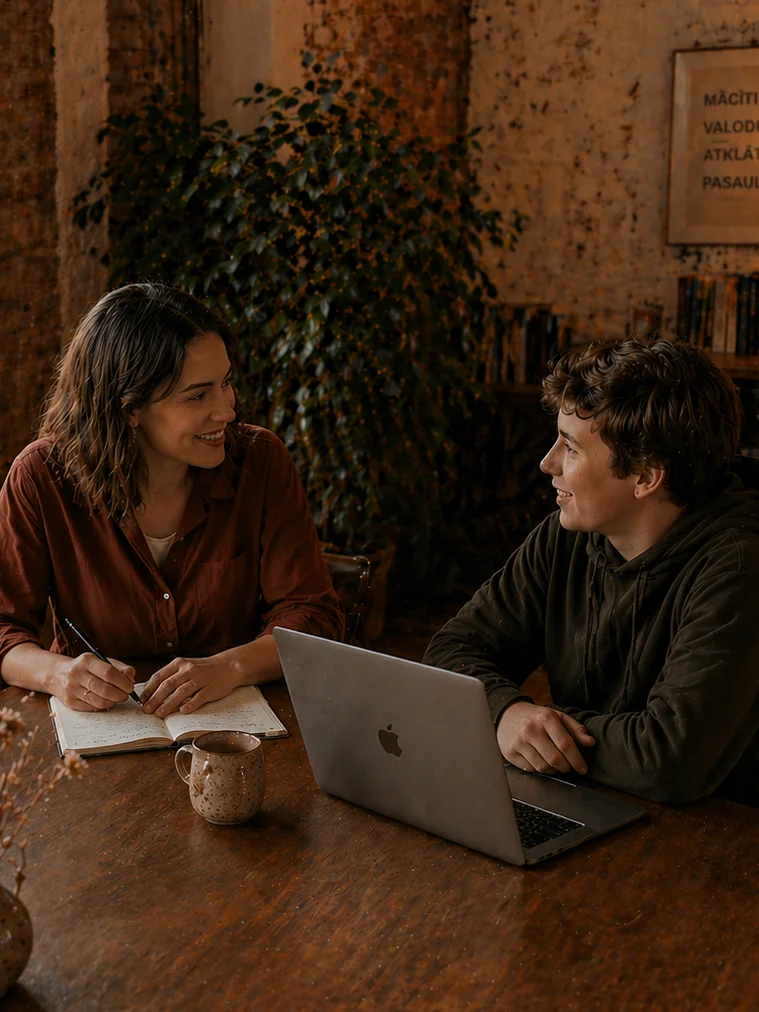
A programme built around your child and a schedule that fits family life. For when you need an individual pace, a gentle start or focused exam prep. Online or in person in Riga.
A programme for your child
Prepare for an exam? Catch up with school? Start speaking from scratch? The programme is built around the individual child — their interests, pace and goal.
A flexible schedule
Mornings, after school, weekends — you pick a slot that doesn’t clash with other lessons and clubs. A lesson can be rescheduled.
Undivided attention
Every minute of the lesson is about your child alone. The teacher sees where they tense up, where they’re bored, where they «didn’t get it» — and adapts the lesson on the spot.
One-on-one is right if:
Book a first lesson
Fill in the form — we’ll match a teacher to your child’s age and character, discuss the goal and a convenient schedule. You can start online or at our centre in Riga.
Book a lesson from €35/lesson · personal income tax (IIN) refund availableLearning with a friend or sibling
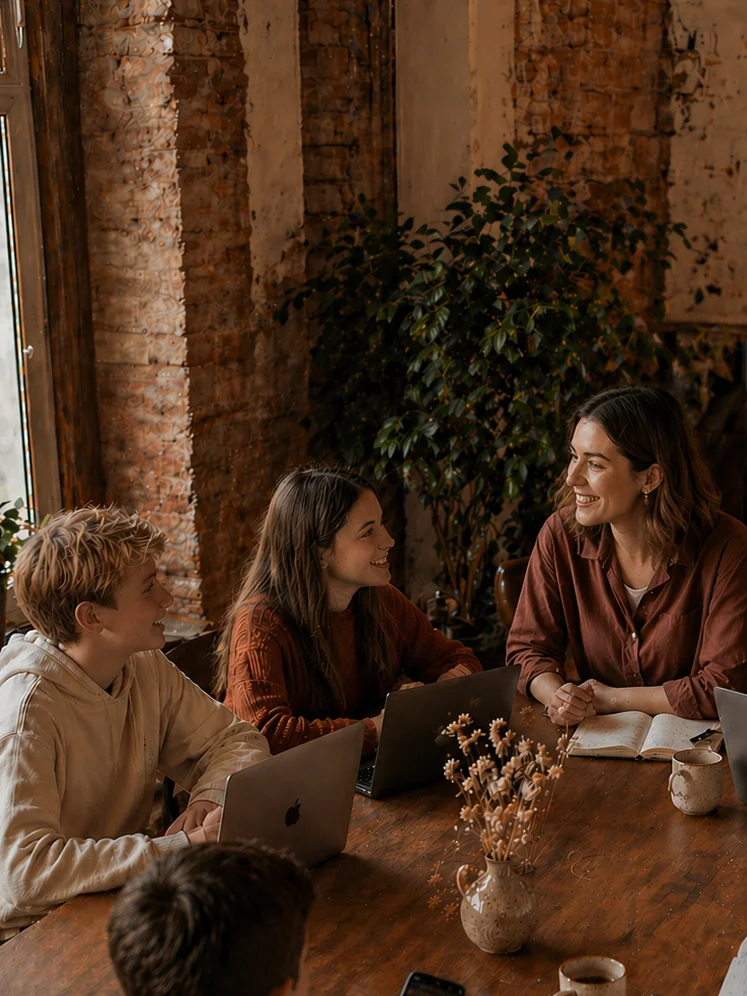
One teacher for two children, with the price about 35% lower for each. For when your child has a friend, brother or sister at a similar level — it’s more fun together and less daunting to speak.
A familiar face beside them
A child finds it easier to speak when the person opposite is familiar: a friend, a brother, a sister. Less tension, more real conversation from the very first lesson.
Cheaper than one-on-one
€22.5 per child per lesson instead of €35. Almost as effective as one-on-one lessons, but the cost is shared between two.
They keep each other going
With a study partner it’s harder to give up: «my friend is going — so I’ll go too». They also chat and practise speaking between lessons.
A pair is right if:
Sign up together
Sign up with a friend: familiar company eases the nerves, and the pair format eases the cost.
Sign up together from €22.5/lesson per child · personal income tax (IIN) refund availableWe teach through interest, not through «you have to»
No 1990s textbooks and no «sit and copy it out». An approach matched to age and character — so the child wants to come back for the next lesson.

«At our school a child speaks and practises from the very first lessons, rather than poring over rules for hours. We teach through topics that are close to children and interesting to them, so they stay engaged and the language starts to live beyond the lesson.»
Lessons that grab attention, not a box-ticking syllabus
Preschoolers respond to games, cartoons and short stories. Older children enjoy quizzes, projects and conversations about what genuinely interests them. Teenagers work with the same content they watch and talk about in everyday life.
The programme adapts to the child
The test on arrival shows the real level and the weak spots. We build the programme around those, not around a generic Year 3 course. The teacher sees where it’s boring, where there’s tension, where they «didn’t get it», and changes the approach right there in the lesson.
We speak, not just write
A child starts speaking from the very first lesson: simple phrases, everyday situations. By the end of term they can hold a flowing conversation. Grammar and writing follow naturally, through speech, rather than the other way round.
Common questions before you sign up
We’ve gathered what parents most often ask before signing up. If you can’t find the answer you need, message us — we’ll help with anything.